Sunday, 2 March 2014

Female Characters of ‘Frankenstein’ and ‘Sense and Sensibility’

Female Characters of ‘Frankenstein’
and ‘Sense and Sensibility’
Name: Baraiya Saryu D.
Subject: The Romantic Literature(Paper-V)
Roll no: 27
Study: MA
Year: Semester – II
Guided By: Heenaba Zala
Submitted To: Department of English
University: MKBU

Introduction:


          Female characters of any novel are always in talk among the people and any critic because they are most of the time marginalized in novel in any condition and very rare novels are there which has female protagonists. Otherwise only man has power to become hero or protagonist of the novel. Even if any female character is at power position in the novel then she is known as ‘Hero of the Novel’. So this is the time and situation of that era and our these two novels, ‘Frankenstein’ and ‘Sense and Sensibility’ was written during that Romantic Era, in which the same situation was there prevailing in society and as all we usually know that, literature is the mirror of the society so what happens in the society, same as happens in the literature and so here we are going to see only female characters from these two noels, ‘Frankenstein’ and ‘Sense and Sensibility’. These both novels are written by female writers but then even the same situation of female characters we can find in it.


          ‘Frankenstein’ was written by Merry Shelley. This novel is first published in 1818 but it was published anonymously. It means its author is frightened to show her name as novelist because in that era female novelists and writers were not accepted by society very easily. Real human being is marginalized then female characters of novel are just nothing so it is common that they are marginalized in just a novel.  It published authentically and with the name of its author Merry Shelley in 1823, means after four years of writing. This novel’s full title is ‘Frankenstein; or The Modern Prometheus’. This novel is an example of early science fiction and we can see some Gothic and Romantic elements too in this novel. There are two main characters in this novel and who is the protagonist of this novel is the question of dispute among critics. But some female characters are there also in this novel, which are marginalized at some extent. First main character is Elizabeth Lavenza and she is the only character which has some position in this whole novel and story. Other minor characters are like, Caroline Beaufort Frankenstein, Justine Moritz, Margaret Saville and some others which have no name or we can call them anonymous female characters.


          ‘Sense and Sensibility’ was written by Jane Austen. ‘Sense and Sensibility’ was written very firstly under the title as ‘A Lady’ and that name is known as pseudo name. It was first published in 1811. This novel is better known as ‘comedy of manner’. This novel also have female author but this novel is far different from ‘Frankenstein’ because this is the novel which has female protagonist and the whole story, plot, structure and theme of this novel took place around female characters only. So here we can say that female characters are not marginalized but they are misrepresented at some extent because in whole this novel they are just talking about match making and marriage only as if they don’t have any another important work in their life. They all are just busy in gossiping and match making. The whole novel takes place in Southwest England, Kent and London, between 1792 and 1797.  This novel is a story of Elinor Dashwood and Marianne Dashwood means two Dashwood sisters. Firstly this novel is written in episodic form and after that it is published as a novel under the title of ‘Sense and Sensibility’. The philosophical resolution of novel is very ambiguous and a reader should decide that in this novel where sense and sensibility merged. Jane Austen was just nineteen years old while she wrote this novel. We can find overflow of female characters in this novel. Some main female characters are Marianne Dashwood and Elinor Dashwood.  Some minor characters are Mrs. Dashwood, Margaret Dashwood, Fanny Dashwood, Lady Middleton, Mrs. Jennings, Charlotte Palmer, Lucy Steele, Anne/Nancy Steele, Eliza Williams, and many others.
Elizabeth Lavenza:
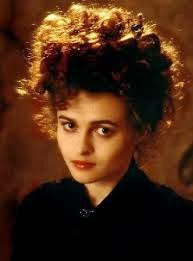
          Elizabeth is the only character, which has some importance and some part to play in whole novel. Other characters are also important in this novel but apart from them Elizabeth has some extra to do in this novel. But with the entry of her in this novel she is marginalized as per my thoughts. She was an orphan child and adopted by Alphonse Frankenstein. He was father of Victor Frankenstein, who is known as protagonist of this novel. But here started something odd for Elizabeth because her entry and rezone of her entry in the Frankenstein Home is quite odd. Because Victor himself narrates her as:
"Everyone loved Elizabeth. The passionate and almost reverential attachment with which all regarded her became, while I shared it, my pride and my delight. On the evening previous to her being brought to my home, my mother had said playfully--'I have a pretty present for my Victor--to-morrow he shall have it.' And when, on the morrow, she presented Elizabeth to me... to protect, love, and cherish."
as if she were a gift for him. She is just like a puppet or a doll, which brings by Victor’s mother and father. They bring her as Victor’s sister and introduced as his cousin in starting of this novel but at an age Victor feels that Elizabeth is a perfect girl for him. Victor describes her as his perfect woman and soul mate. She herself has no choice for her perfect man that’s the point here which can make anyone to think on it. She is suppressed.

          Victor creates a monster after his mother’s death. He wants to do some experiments and his experiments create a monster. So we can easily say that he done some unnatural thing so he should pay for it but it is not the thing. Monster also demands for his female partner and to get body for it monster kill Elizabeth on her wedding night. So if Victor’s creation is sin for the society and nature then we can say that Elizabeth paid for Victor’s sin. 

We can describe whole Elizabeth’s character in only a single line it is the potential of her character.
“An orphaned young girl taken in by Victor's parents. She is passive, waiting for Victor's attentions. She marries Victor, and is murdered on their honeymoon.”    
          In whole the novel she is known as orphan child, adopted child, cousin of Victor, and Beloved of Victor. But personally she has no identity. This is the character of Elizabeth Lavenza.

Caroline Beaufort Frankenstein:

          Caroline Beaufort Frankenstein is Victor's mother. She comes from a poor but dignified family, and agrees to marry Alphonse Frankenstein, after her father dies. Victor narrated this thing about her in very memorable words:
“her father died in her arms, leaving her an orphan and a beggar. This last blow overcame her; and she knelt by Beaufort's coffin, weeping bitterly, when my father entered the chamber. He came like a protecting spirit to the poor girl, who committed herself to his care, and after the interment of his friend he conducted her to Geneva, and placed her under the protection of a relation. Two years after this event Caroline became his wife.”
She is left alone to fend for herself. The two have a wonderful marriage until she dies a few years later because of scarlet fever. Both Alphonse and Caroline hope that one day, Victor and Elizabeth will get married. Even when she is going to die she spoke some words to Victor and Elizabeth and those touchy words can make any person emotional. That was narrated in novel as:
“She joined the hands of Elizabeth and myself: "My children," she said, "my firmest hopes of future happiness were placed on the prospect of your union. This expectation will now be the consolation of your father. Elizabeth, my love, you must supply my place to your younger cousins. Alas! I regret that I am taken from you; and, happy and beloved as I have been, is it not hard to quit you all? But these are not thoughts befitting me; I will endeavor to resign myself cheerfully to death, and will indulge a hope of meeting you in another world."”
This is the only thing about Caroline in this whole novel.

Justine Moritz:

          Justine is a servant and a baby sitter of Frankenstein Family. She was described in narration as:
“Madam Moritz, her mother, was a widow, with four children, of whom Justine was the third. This girl had always been the favorite of her father; but, through a strange perversity, her mother cannot endure her, and, after death of Mr. Moritz, treated her very ill. My aunt observed this; and, when Justine was twelve year of age, prevailed on her mother to allow her to live at her house.”  
 She use to take care of Victor’s younger brother William Frankenstein and done works of Elizabeth and give her company too because Elizabeth feels alone some times because no other female family member apart from her in that home. These are Victor’s words for Justine:
"Justine was the most grateful little creature in the world: I do not mean that she made any professions; I never heard one pass her lips; but you could see by her eyes that she almost adored her protectress. Although her disposition was gay, and in many respects inconsiderate, yet she paid the greatest attention to every gesture of my aunt. She thought her the model of all excellence, and endeavored to imitate her phraseology and manners, so that even now she often reminds me of her.”
But after sunny day night has to come as it is Justine also suffers because in narrator’s words:
“She is accused of the murder of the William, is convinced circumstantial evidence, and, although thought innocent by the Victor and entire Frankenstein Family, is executed for the crime.”  
  So she was death sentenced and killed by the people. Monster killed Henry and William. So we can say that she also paid for Victor’s mistake.


Margaret Saville:
          She is just a passive character of this novel. She never appears on the screen of novel. Her name is just mentioned somewhere in this novel. She is sister of Robert Walton and the receiver of Robert’s letter which narrates the story of Victor Frankenstein.

Agatha De Lacy:
          At very firstly she was introduced in novel anonymously and described as “a young creature”. She was introduced through the Monster only. She was daughter of De Lacy family.
Safie:
          She was a daughter of a Turkish merchant. She was staying nearby De Lacy family. She and son of De Lacy family loved each one so she was adopted by De Lacy family.

Elinor Dashwood:

          She is elder from all three daughters of Dashwood family. She is representative of SENSE in this novel. Elinor is the common voice of any girl which has sense and takes practical decision to keep sense in mind. Elinor is the expression of common sense in this crazy clan of excitable, romantic, women, and we are not sure what would happens to her sisters and family, without her. She is the only single character from Dashwood family in this novel, who thinks about practical stuff like, where are the Dashwood going to live? How should they best respond to their new batch of crazy neighbors and acquaintances? What happens if Marianne is not engaged to Willoughby? Even her artistic is more measured and precise than Marianne’s dramatic expression.
           Her practical aspect helps everyone in the Dashwood family forever. But Elinor herself faces some emotional issues in this novel but she is quite enough to handle all the stuff about it. She loves Edward but he loves another girl so she never said a single word about it in whole this novel.
“The excellence of his understanding and his principles can be concealed only by that shyness which too often keeps him silent. You know enough of him to do justice to his solid worth. But of his minuter propensities, as you call them, you have from peculiar circumstances been kept more ignorant than myself. He and I have been at times thrown a good deal together, while you have been wholly engrossed on the most affectionate principle by my mother. I have seen a great deal of him, have studied his sentiments and heard his opinion on subjects of literature and taste; and, upon the whole, I venture to pronounce that his mind is well-informed, his enjoyment of books exceedingly great, his imagination lively, his observation just and correct, and his taste delicate and pure. His abilities in every respect improve as much upon acquaintance as his manners and person. At first sight, his address is certainly not striking; and his person can hardly be called handsome, till the expression of his eyes, which are uncommonly good, and the general sweetness of his countenance, is perceived. At present, I know him so well, that I think him really handsome; or, at least, almost so.” 
This quote shows us real feelings of Elinor. But at the end when she realizes that Edward also loves her then finally she expresses her feelings towards him in front of her sister and after that she told this to Edward. She is known as sense in the novel, ‘Sense and Sensibility’.
Marianne Dashwood:

          She is second daughter of the Dashwood family. She was romantic and expressive in nature and she is totally different from her elder sister Elinor. The fact matter about Marianne is if we talk about sense then we can clearly say that Marianne just does not have it at all. She is very rarely thinks about what is practical or common sense.
"I am afraid," replied Elinor, "that the pleasantness of an employment does not always evince its propriety."

"On the contrary, nothing can be a stronger proof of it, Elinor; for if there had been any real impropriety in what I did, I should have been sensible of it at the time, for we always know when we are acting wrong, and with such a conviction I could have had no pleasure."
 This is the quote about Marianne’s thinking. Here we can see different point of views of this both sisters. Elinor thinks about social factors in any condition when Marianne thinks that one should do what he or she wants to do at any cost. Marianne is representative of sensibility in this novel. She never thinks before she acted and she surely believes that one should act and directed by his or her feelings, not logic. She pours out all her feelings even in a single moment. She is in love with                  Mr. Willoughby. This quote gives us rezone about Marianne’s love towards him:
“Willoughby was a young man of good abilities, quick imagination, lively spirits, and open, affectionate manners. He was exactly formed to engage Marianne's heart; for, with all this, he joined not only a captivating person, but a natural ardour of mind, which was now roused and increased by the example of her own, and which recommended him to her affection beyond everything else.”
But when she knows about Mr. Willoughby’s engagement with another girl she is totally down and broken hearted at all.

          But we can say that this thing brings a change in her thinking and feelings and so she realizes the reality and practicality of society. Marianne comes to realize that her emotions, feelings and expectations only kill her from inside and so she decided to make herself strong and tuff enough to handle the situation and her own self too. She wants to put element of practicality in her life like her sister. And so she decides to get married with Colonel Brandon. And it is the final practical step in her life. She is not completely given up on feelings. This quote shows us that still she has dreams and hope for her future. 
“Edward is very amiable, and I love him tenderly. But yet, he is not the kind of young man -- there is a something wanting, his figure is not striking -- it has none of that grace which I should expect in the man who could seriously attach my sister. His eyes want all that spirit, that fire, which at once announce virtue and intelligence. And besides all this, I am afraid, mama, he has no real taste. Music seems scarcely to attract him, and though he admires Elinor's drawings very much, it is not the admiration of a person who can understand their worth. It is evident, in spite of his frequent attention to her while she draws, that in fact he knows nothing of the matter. He admires as a lover, not as a connoisseur. To satisfy me, those characters must be united. I could not be happy with a man whose taste did not in every point coincide with my own. He must enter into all my feelings; the same books, the same music must charm us both.”
But she developed a sense around her own self and it is the emotional core of this novel. She is another mail character around whom; the story takes place in this novel.
Margaret Dashwood:

          She is third and youngest daughter of Dashwood family. She is very good in nature and she is just 13 years old in this novel. She is good tempered also but is not expected as wise as her sister when she reached at their age. She was more like a child.
Mrs. Dashwood:

           She is forty years old at the beginning of this novel and she is second wife of    Mr. Henry Dashwood. After reading Mrs. Dashwood’s character we can say that Marianne is like is her mother because she is as emotional and full of feelings like Marianne only.
 Lady Middleton:

          She is very genteel lady and wife of Mr. Middleton. She is quieter than her husband and most of the time concern with only her four children’s motherhood. She is so dull in nature and this quote gives us a thought like Jane Austen herself does not interested in this character. 
“They were of course very anxious to see a person on whom so much of their comfort at Barton must depend; and the elegance of her appearance was favorable to their wishes. Lady Middleton was not more than six or seven and twenty; her face was handsome, her figure tall and striking, and her address graceful. Her manners had all the elegance which her husband's wanted. But they would have been improved by some share of his frankness and warmth; and her visit was long enough to detract something from their first admiration, by shewing that though perfectly well-bred, she was reserved, cold, and had nothing to say for herself beyond the most common-place inquiry or remark.”

Mrs. Jennings:

          She is mother of Lady Middleton and a widow woman. She is alone in her life and done all her duties singularly. And now in old age she visited her children’s home mostly.
“Mrs. Jennings was a widow, with an ample jointure. She had only two daughters, both of whom she had lived to see respectably married, and she had now therefore nothing to do but marry all the rest of the world.”
Charlotte Palmer:
           She is sister of Lady Middleton and another daughter of Mrs. Jennings. Her husband is always rude to her.
Mrs. Smith:
          She is very wealthy and settled woman in this novel. She is aunt of Mr. Willoughby and forces him to engage with another girl Eliza Williams. 
                                                                                                                                                                                                                                                        (3,276)


Saturday, 26 October 2013

Novel: Themes, Background, Types

Name: Baraiya Saryu D.
Subject: Indian Writing in English (Paper-4)
Topic: Novel: Themes, Background, Types
Roll no: 30
Study: MA
Year: Semester – I
Guided By: Heenamadam
Submitted To: Department of English
University: MKBU
The Novel: Themes, Background, Types
Introduction:
The ‘novel’ is a type of literature that we know. This novel is a new trend to India. Novel is very new and recent form of literature. All others form of literature like, Epics, short stories, poems, dramas, lyrics, ballads and etc... are very old and respected forms among art and literature lovers. These all forms of literature are very old and introduced before many centuries in India. But novel is very new form of literature for India and it is only during a period of little more than a century. It has occurred and taken root in India. Now we have a small question that we are taking about novel but what is the novel? We all know about the novel, form of literature but very few among us know the proper definition of novel. So we will begin with definition of novel:
“Novel means the long sustained piece of prose fiction.”
            Now we are going to discuss about India’s literature of novel. We all know that novel is very new form of literature and it is introduced in India in near period of time. But some scholars deny to it and they put some examples of Sanskrit works like:
Bana’s Kadambari
Subandhu’s Vasavadutta
They all use to say that these works of Sanskrit are also novels and I think they are right at some extent but at the same time I believe that description given in all that works are not appropriate. These works are proud of our regional literature, it is like a marble stone or we can say it benchmark of our literature but we can call it novel because it’s formatting differs from formatting of novel. These works has long narration and story and plot and even sub-plot, too. But then even it is not pure form of novel in Indian literature. We have to wait for novel till half of the 19th century. For the very first time in our India pure novel is not written. Christian missionaries had translated ‘Bible’ with the help of Indian scholars in regional and public languages of India. ‘Bible’ is in pure prose so it cans conceder as first translated novel or prose work in Indian literature. And after that translation, prose currency came in power or we can say it that prose work becomes handy for official use, records, and journalism. End even our old Sanskrit Classics translated in prose work into the spoken languages of the people. Even our scholars translate Western literature in our own language and they also translate novels and other literature, too. This translation takes form of adaptation or summary kind of transformation. Like this first step toward new form of literature ‘novel’ is over.
            After the first step another step is new step or we can call it next step was the composition of new/original works. But in it our scholars have their own limitations. At the beginning they try to imitate Western authors or they wrote under the inspiration of Western models. Now a day’s situation is changed. In current situation original work of literature is published in dozen of Indian languages and English language, too. And many other novels of different languages and even novels of English literature are published in regional languages of India. It was in Bengal that the ‘literary renaissance’ first manifested itself in English literature. But afterwards that renaissance can be seen in Mumbai, Madras and other parts of India as well.
              In our India first novel is written in Bengali and it was named as ‘Alaler Gharer Dulal’. This novel is published in 1858. Afterwards it was translated in English as ‘Spoilt Son of a Rich Family’. This novel is also noted by Jack Wilton in The History of the novel in India. This novel is noted as a pioneer work.
Bankim Chandra Chatterjee:
            We have to note that real beginnings were with the work of the great Bankim Chandra Chatterjee. His first novel was published in 1864, in English and it was named as ‘Rajmohan’s wife’. And in 1864 he wrote another novel in Bengali named ‘Durgeshnandini’. But afterwards it was translated in English in 1890. His many other novels appeared between 1866 and 1886. They all are as under.
v  Kapalkundala
v  Vishvriksha(The Poison Tree: A Tale of Hindu Life in Bengali)
v  Krishnakantar Uyil(Krishnakanta’s Will)
v  Anandmath
v  Devi Chaudhurani
and many others. And all these novels were translated in English sooner or later. Bankim contributed a lot in Bengali and English literature. And even he tries to show social and culture problems of society in his works of literature. He was master of romantic and historical novel and he himself confessed:
“I am a teacher or nothing”.
In his two novels, named ‘The poison Tree’ and ‘Krishnakanta’s Will’, a married man fall in love with a young widow and his struggle for his love. By this type of plays he tried to throw light on life of a Hindu young widow. This is the real motif of Bankim Chandra Chatterjee in Indian fiction. He was mostly inspired by Tod and Scott. But ‘Anandmath’ is known as Bankim’s best work in Indian writing in English in novel form. It was published in 1882. The Hinduism, Hindu widow, sannyasi, and many more characters, which are represents Indian society and rigidity, are most noticeable characters in fiction of Bankim’s writing.  
Rabindranath Tagore:
            Rabindranath Tagore is known as man of religion. He is always memorable for his work ‘Gitanjali’, In ‘Gitanjali’ poet tries to incarnating the spirit of India, a prophet of the Religion of Man. But Tagore is very noticeable novelist also. Tagore achieved his first success with ‘Choker Bali’ and it was published in 1902. That novel was translated in English as ‘Binodini’ by Krishna Kriplani.
Here for the first time in Indian literature the actions and reactions arising out of the impact of the external happenings.”
                                                                                                            -Dr. Sukumar Sen
‘Binodini’ is also story of a young widow, too. But Tagore is different than Bankim and he was more convincing in storytelling and in psychological study of character of novel. So his skills give him new height as a novelist in Indian writing in English.  Tagore’s other work named, ‘Yogayog’ is also noticeable work. Its main character, Kumudini gives us remembrance of character Nora in Ibsen’s ‘A Doll’s House’. Like this Tagore was very great figure at that time and even in now days also.
Sarat Chandra Chatterjee:
            Sarat Chandra was also famous during that era. He also started with imitating Tagore and Bankim but after that he also shows his real knowledge. He mostly wrote in last decket of 19th century and first two dacet of 20th century. Sarat also passed from the stage of Tagore and Bankim and his experiences give him real identity of writer. His some famous, best and noticeable works are,
v  Shrikanta
v  Grihadaha
v  Pather Dabi
v  Bipradas
v  Ses Prasna
He wrote all his works in regional languages but most of his works are translated by other scholars in English. Like ‘Shrikanta’ was translated by K. C. Sen and Theodosia Thompson. Sarat Chandra tries to portray tears and sweat of lower class and poor class and even people who has no class, with his literary works. For Sarat Chandra we can easily say that he was complete novelist who use his art simultaneously as a camera, as a surgeon’s knife, and also as a chalice of hope.  
             Many other writers also wrote novels in that mean time. Like,
v  Raj Lakshmi Devi’s ‘The Hindu Wife’ in 1876
v  Toru Datta’s ‘Bianca’ in 1878
v  Kali Krishna Lahiri’s ‘Roshinara’ in 1881
v  H. Dutt’s ‘Bijoy Chand’ in 1878
v  Khetrapal Chakravarti’s ‘Sarata and Hingana’ in 1895
These all novels were written in English, have for us today no more than an antiquarian or historical interest. This trio, Bankim-Tagore-Sarat was known as ‘triune glory’ of that time but some other outstanding novelists were also there in that time of era. Their names are only have been scouring the ocean of everyday life in Bengal. Their names are,
*      Tarasankar Bandyopadhyaya
*      Bibhuti Bhushan Bandyopadhyaya
*      Manik Bandyopadhyaya
*      Naini Bhaumik
*      Gajendrakumar Mitra
*      Manoj Basu
            Now a days novel is living and involving form of literature. It is the only form which is known as reader friendly form of literature. And now in our India novel becomes more and more popular among the readers. For our convenience we divided novels in some schools. These schools are based on theme of novel. Many novels have common theme but different aspects. So this type of schooling helps us to understand about history, time, settings, and etc. about novels and novel’s background in Indian writing in English.
River novel:
            Our India is known as country of religion. We are considering river as our life line and we all know that our life is gift from our mother. So we always pray river as our mother and all river of India are very peas and holey for us. River is like a part of our life and we cannot imagine our life without river. So this very important part of our life becomes part of our literature. Many novels have theme of river. In many novels river plays vital role as it is also an important character of novel. So that type of all novels is known as ‘RIVER NOVEL’. In this type of novel action takes place by the side of a river. As an example,
o   In Rajanikanta Baradoloi’s novel ‘Miri-Jiyari’, the river Subansri is a participant in the action.
o   K. S. Vankataramani’s ‘Murugan: The Tiller’, evoking the village on the Cauvery.
o   Humayun Kabir’s ‘Men and Rivers’, action takes place on the bank of the Padma.
o   R. K. Narayan’s most of the novels take place in Malgudi on the bank of the Sarayu.
o   Raja Rao’s ‘Kanthapura’, the river Hemavathy is a person and in novel ‘The Serpent and the Rope’, the Ganges is almost a goddess.
All these rivers as character show feminine power and personality of India.
Assam Novel:
            Assam’s tea gardens and estates are very famous for their beauty and some novels are takes place in Assam. Those all novels describe beauty and situation of Assam. So, all those novels are known as ASSAM NOVEL. Assam’s life of plantation is shown by the authors in this type of novels. As an example,
  • Beena Barua’s ‘Senji Patar Kahni’, the theme of novel is life in tea gardens of Assam.
  • Mulk Raj Anand’s ‘Two Leaves and a Bud’, is a strong study of life in tea-estate of Assam.
  • Raja Rao’s ‘Kanthapura’, takes place in estate of coffee.
  • Manohar Malgonkar’s ‘Combat of Shadow’, also places in Assam tea-estate.  
In all these novels main point is politics and human emotions and this theme is shown in more sophisticated style.
History Novel:
            Our India has powerful past and our history portion is quite good and enough. So our many writers were fascinated towards our history and take some point or part of our history and elaborate in form of novel. History gives them challenge to show their creativity in limitations and that is the real charm of writing. So, history is the most favorite part of our literature which writers want to retell in novel. So, this type of novels known as ‘HISTORY NOVEL’.  As an example,
  • Hari Narayan Apte describes history of Maratha in novel, ‘Ushakal’.
  • T. Ramkrishna’s ‘Padmini’, is shows romance of 16th century and leading us towards battle of Talikote.
  • Romesh Chander Dutt’s ‘The Slave Girl of Agra’, is historical romance.
  • Sir Jogendar Singh’s ‘Nur Jahan’, also based on romantic story of history.
  •  Vimala Raina’s ‘Ambapali’, takes us back in days of Ajat Shatru and tells us story of dancer.
  • A. S. P. Ayyar’s ‘Baladitya’ and ‘Chanakya and Chadragupta’.
These all novels takes bake us in ancient time and place. These novels give us knowledge of history with new portration and new significance and also new vision to look towards history and our past.
Modern Novel:
            Some novels are shown political issues and time situation of that era. Those novels take part to bring revolution in society, for the sake of society. Those novels are known as ‘MODERN NOVEL’.  Some noticeable modern novels are,
  • Rabindranath Tagore’s ‘The Home and The World’ and ‘Four Chapters’.
  •  Mulk Raj Anand’s ‘The Sword and The Sickel’.
  • K. A. Abbas’s ‘Inqilab’.
  • K. S. Venkataramani’s ‘Kandan: The Parriot’.
  • Raja Rao’s ‘Kanthapura’
  • N. S. Phadke’s ‘Leaves in the August’.
  • Bhabani Bhattacharya’s ‘So Many Hungers’,
  • R. K. Narayan’s ‘Waiting for the Mahatma’,
  • Kamala Markandaya’s ‘Some Inner Fury’, and many more.

Partition Novel:
            Our India is parted with Pakistan in 1947 and afterwards partition becomes the main theme for novel because partition creates very strong image on mind of people. People had to suffer a lot during the time of partition. Many families were ruined because of it. Partition creates a horror on mind of people. So, that time is also known as ‘Partition horror’. Our writers try to draw real picture of partition with the help of literature. Those novels are known as ‘PARTITION NOVEL’. Some examples are,
  • Khushwant Sigh’s ‘Train to Pakistan’, we can find horror in this novel but good point is that we can find humanity also. This work is perfect balance of both.
  • Balachandra Rajan’s ‘The Dark Dancer’.
  • Manohar Malgonkar’s ‘A Bend in the Ganges’.
These all novels show horror of partition during that time. We cannot even imagine the situation of that time. Devendra Satyarthi quoted that,
“No literature based on hate and prejudice can really be great. It was a drama of degradation and shame, a drama of human decay, showing how the minds of the two communities were poisoned by the dogma of two-nation theory.”
And personally I think that he is right.
Novels of Social Criticism:
            We all know that literature is just a mirror of the society. We can find all those things in literature which we can feel around us. We also can say that,
“Literature is Criticism of the society
because our authors criticize our society with their writings. Novel is very famous form of literature so to reach to more people, writers chooses novels to criticize society. Those novels are known as NOVELS OF SOCIAL CRITICISM’. Let’s see some example of it.
  • Romesh Chunder Dutt’s ‘The Lake of Palms’, is a critical study of social life in Bengal.
  •  T. Ramkrishna’s ‘The Dive of Death’, takes place around superstitions and which makes people cowards.
  • S. K. Ghosh’s ‘The Prince of Destiny: The New Krishna’, portrays utopian East and West.
  • S M. Mitra’s ‘Hindupore: A Peep behind the Indian Unrest’, is apolitical satire in social way.
  • Sir Jogindra Singh’s ‘Nasrin’ and ‘Kamni’.
  •  Balkrishna’s ‘The Love of Kusuma’ shows social life, culture, society, region and etc of Panjab.
  • Firoz Khan Noon’s ‘Scented Dust’, is full fo love and intrigue for love.
  • Dewan Sharar’s ‘The Gong of Shiva’, is also deals with the theme of love and intigue.
  • Ahmed Ali’s ‘Twilight in Delhi’, leads us towards life of Muslims in Delhi.
Sannyasi Novel:
            Our India is known as country of sadhu, sannyasi, math, bava, fakir. So they all have a special part in our literature. Some novels are also based on sannyasies. So, all those novels are known as SANNYASI NOVEL’. We can get examples like,
o   Bhabani Bhattacharya’s ‘He Who Rides a Tiger’.
o   R. K. Narayan’s ‘The Guide’. 
o   Kamala Markandaya’s ‘A Silence of Desire’ and ‘Possession’.
o   Anand Lall’s ‘Seasons of Jupiter’.
o   Shri Devudu’s ‘Mahabrahmana’.
o   K. M. Munshi’s epic novel ‘Bhagwan Parashurama’
Most of them novels have story of fake sadhu or sannyasi and his cheat to society.

Conclusion:
                        At the very beginning of form of novel in India our authors faces many problems. First of all form of novel came very late in India so it was give feelings of down trodden, after that very difficult task is to write in another language than our own regional language, after that what to write was the biggest question. What can be the subject of novel, what are the main aspects of novel and all that things confuses our writers. They solve that problem with some imitations and their personal knowledge. And at the end even main problem is length of novel. How to write that much long novel in other language?          
            Here we were discussing major themes and types of novel in Indian Writing in English. In olden times, these novels were known as Indo-Anglian Novel. Our writers never attracted towards new techniques of plotting, narration or characterizations of novel. They repeating just same all the time and it is conceder our writers’ limitations. But most of them started with translating literary work, then imitating style and story of foreign writers. But now slowly and steadily situation is changing. Now our writers have their own story to tell to readers. Now they have no need to imitate foreign writers. At very beginning language is hurdle. To write in foreign language is bit difficult task for our others but now it is not so. Our writers still have face problems to express real expression of characters but they can manage it easily. Now a days novel becomes most famous form of literature in Indian writing in English. Now youth like to read novels more than any other form of literature. Now Indian novels are also parted in parts like classic novels and popular novels. In recent era Chetan Bhagat, Arvind Adiga, Jumpa Lahiri, Amitav Ghosh, and many others came in recent novelist. They are popular now days. In recent time language of novel and literature is changed and different then olden one. But we can easily recognize that that time is different and now time is different. So, we can enjoy old and new both type of literature.

(3,010)

Biographia Literaria Chapter: XIV

Name: Baraiya Saryu D.
Subject: Literary Theory and Criticism (Paper-3)
Topic: Biographia Literaria Chapter: XIV
Roll no: 30
Study: MA
Year: Semester – I
Guided By: Dr. D. Baradsir
Submitted To: Department of English
University: MKBU
Biographia Literaria: Chapter – XIV
Introduction:
          Biographia Literaria is a very famous and benchmark type of work of literature. It was written by Samuel Taylor Coleridge. S.T.Coleridge was poet of romantic era and his time duration was 1772-1834.


He contributes in number of amounts in English Literature. His some famous and noticeable works are:
o   The Rime of the Ancient Mariner
o   Frost at Midnight
o   Christabel
o   Kubla Khan
These all poems give him a position in history of literature. And now we are going to discuss about his most prominent and legendary work of literature named as ‘Biographia Literaria’. It was published during 1815 to 1817. It is a critical work of S.T.Coleridge. This whole work is separated in to 24 chapters and it is known as standard of S.T.Coleridge’s critical work. This critical work contains autobiographical elements of Coleridge but then even it is not direct, simple or linear autobiography. It is thoughtful type of work. Originally this work was written for preface for his preface to collected volume of his poems. This work was written by Coleridge for explaining his own narrative style of poetry and mitigating his own style and practice in poetry. But after some time this work grew as a literary autobiography. This work has so many facts and concerning his education and studies and his early literary adventure. He wrote about his personal views and extended criticism on Wordsworth’s theory of poetry as given in preface of ‘Lyrical Ballads’. And by this work of criticism he supported his own theory of poetry as he wrote in ‘Lyrical Ballads’.

          This work is very long and it is structured very loosely. So it is very difficult to discuss whole work so here we are trying to discuss about only chapter: XIV. It was personally published in 1817. In his practical approach to criticism we can get sign of Coleridge as a poet and while discussing theory we can see philosophical sight and vision of Coleridge. So as per it in this chapter: XIV of critical work ‘Biographia Literaria’ we can see Coleridge’s vies on nature and function of poetry in philosophical style and terms. At beginning of this chapter Coleridge try to differentiate poetry and prose as a poet. But after it he again tries to differentiate Poetry and poem in his philosophical style. He was the first English writer who firmly believes that every work of art is an organic whole by its nature.

Two Cardinal Points of Poetry by Coleridge:
          This point started with:

“During the first year that Mr. Wordsworth and I were neighbors, our conversations turned frequently on the two cardinal points of poetry, the power of exciting the sympathy of the reader by a faithful adherence to the truth of nature, and the power of giving the interest of novelty by the modifying colours of imagination.”        

 Coleridge started his essay with the views on two points, which are just fundamental points to talking about poetry:

1.     The power of exciting the sympathy of the reader by a faithful adherence to the truth of nature.
2.      The power of giving the interest of novelty by modifying with the colours of imagination.
         
          In first point about poetry, Coleridge tries to say that a poet write a poem related to nature in very simple form and style. Any people can read and enjoy poetry. So who poet is devoted and loyal to the nature and has power to moving reader’s heart and mind towards the nature is writing this type of poetry and it was decided and by him that William Wordsworth would write poetry dealing with the theme according to first basic point and that type of poem is very near and realistic to the nature and ability to leads out the people near the nature. He quoted that:

“The sudden charm, which accidents of light and shade, which moon-light or sunset diffused over a known and familiar landscape, appeared to represent the practicability of combining both. These are the poetry of nature.”  

In this type of poems subjects are very common and taken from and chosen from day to day life and very ordinary life. The characters of this type of poems are very general and ordinary and we can easily find out this type of characters in each village.
In second point about poetry, Coleridge drags our attention towards supernatural elements and the events. And he also said that he use to write poems, related with this second cardinal point. He quoted that:
“the excellence aimed at was to consist in the interesting of the affections by the dramatic truth of such emotions, as would naturally accompany such situations, supposing them real. And real in this sense they have been to every human being who, from whatever source of delusion, has at any time believed himself under supernatural agency.”  
And he talks about supernatural elements, too. He said that poet convert poetry and atmosphere of poetry with the help of his self imagination and with mind’s eyes poet can turn all natural things into supernatural. Poet can create an imaginative world with his thoughts. After describing both these types of poetry Coleridge gave example to prove his point. ‘The Lyrical Ballads’-volume of poems written by Coleridge and Wordsworth in collaboration -deals with these two core points. Wordsworth quoted that:

“was to give the charm of novelty to things of every day, by awakening the mind’s attention from the lethargy of custom, and directing it to the loveliness and the wonders of the world before us.”

Coleridge’s Views on Wordsworth’s Poetic Creed:
              Coleridge himself not agrees with Wordsworth’s views on poetic diction. And so his different point of view about poetic faith he gives in ‘Biographia Literaria’. Wordsworth adopted language of day to day life in poetry in ‘Lyrical Ballads’. And even in preface Wordsworth giving strong and powerful criticism on using of common language in poetry. Coleridge’s view is differs with him and so in his point of view’s defense he wrote:
“Had Mr. Wordsworth's poems been the silly, the childish things, which they were for a long time described as being had they been really distinguished from the compositions of other poets merely by meanness of language and inanity of thought; had they indeed contained nothing more than what is found in the parodies and pretended imitations of them; they must have sunk at once, a dead weight, into the slough of oblivion, and have dragged the preface along with them.

  He thinks that if these poems go through criticism then they will be criticized negatively by Critics. Preface is also criticized because of its simple language and simple formation. But it is not happened and Wordsworth’s views were accepted by Critics. So he gives full credit to the genius of Wordsworth and quoted that:
“year after year increased the number of Mr. Wordsworth's admirers. They were found too not in the lower classes of the reading public, but chiefly among young men of strong sensibility and meditative minds; and their admiration (inflamed perhaps in some degree by opposition) was distinguished by its intensity, I might almost say, by its religious fervour.”

And with this point he also added that it does not mean that he fully agrees with the all points of Wordsworth on poetic faith. To prove this he writes:
“With many parts of this preface in the sense attributed to them and which the words undoubtedly seem to authorize, I never concurred; but on the contrary objected to them as erroneous in principle, and as contradictory (in appearance at least) both to other parts of the same preface, and to the author's own practice in the greater part of the poems themselves. Mr. Wordsworth in his recent collection has, I find, degraded this prefatory disquisition to the end of his second volume, to be read or not at the reader's choice.

Here we can say that Coleridge is frank and straight forward to point out his own views even if he differs with Wordsworth and he was saying that Wordsworth is wrong in theory and contradictory, not only in parts of the Preface but also to the practice of the poet himself in many of his points. He opposed with Wordsworth’s analysis of poetry so he told him honestly that he is not agree or in favor of his point of views.   

Difference Between Prose and Poem:
             
              This is third part or we can say it a point of Coleridge’s ‘Biographia Literaria’. We can easily recognize that the poem includes the same elements as prose compositions. So it is bit difficult to differentiate poem and prose but the difference is between combination of those elements and objects aimed at in both the composition. So they both are different in their particular aim for which they are written by poet. For it Coleridge says:
“while it is the privilege of the philosopher to preserve himself constantly aware, that distinction is not division. In order to obtain adequate notions of any truth, we must intellectually separate its distinguishable parts; and this is the technical process of philosophy. But having so done, we must then restore them in our conceptions to the unity, in which they actually co-exist; and this is the result of philosophy. A poem contains the same elements as a prose composition; the difference therefore must consist in a different combination of them, in consequence of a different object being proposed. According to the difference of the object will be the difference of the combination.”

If we differentiate poem and poetry in very simple way then we can say that which object’s subject is very simple, and main rezone to write an object is just to remember all olden facts and memories with inner flow of feelings without taking extra care of rhyme or metre that composition is known as poem. A poet should make use of artificial words and arrangement words with the help of metre. It can be done without rhyme or metre sometimes.  
“A poem contains the same elements as a prose composition; the difference therefore must consist in a different combination of them, in consequence of a different object being proposed. According to the difference of the object will be the difference of the combination. It is possible, that the object may be merely to facilitate the recollection of any given facts or observations by artificial arrangement; and the composition will be a poem, merely because it is distinguished from prose by metre, or by rhyme, or by both conjointly.”
 
As an example here I gave two lines of poem, which contains name of months and days. It is without any rhyme or metre:
“Thirty days hath September,
April, June, and November, &c.”
But in prose composition is done by metre or rhyme and it is compulsory and it is the main difference which is differentiating an object in prose or poem. Then Coleridge makes an addition that only rhyme and metre cannot create a poem or poetry. Then he talks about some other prose writings and its instant purpose and final end. A form of literary work named prose; poem and poetry are required and written for instant purpose and the final truth because it can be written for any subject like science, fiction, novel, romance and etc. And it has to convey some information to the reader or give pleasure or delight in at a moment and the final end may be to give truth. So the most important thing about work is to give immediate pleasure and delight to the reader not metrically composed.
              After this discussion Coleridge himself raises the question that:
“Would then the mere superaddition of metre, with or      without rhyme, entitle these to the name of poems?”
Then he himself gives answer of it with saying that if metre is wonderfully added the other parts of composition that also must suite and match with it. And if every part of composition like, metre, diction, topic, subject, theme, background, and rhyme must be harmonize with wholeness with the composition and then and then that composition can take form of poem or deserve the name of poem. In Coleridge’s words:
“The answer is, that nothing can permanently please, which does not contain in itself the reason why it is so, and not otherwise. If metre be superadded, all other parts must be made consonant with it. They must be such, as to justify the perpetual and distinct attention to each part, which an exact correspondent recurrence of accent and sound are calculated to excite. The final definition then, so deduced, may be thus worded. A poem is that species of composition, which is opposed to works of science, by proposing for its immediate object pleasure, not truth; and from all other species--(having this object in common with it)--it is discriminated by proposing to itself such delight from the whole, as is compatible with a distinct gratification from each component part.”

Definition of Poem:
              A piece of writing in which the expression of feelings and ideas is given intensity                         by particular attention to diction (sometimes involving rhyme), rhythm, and               imagery. So in short we can say that poem is just for pleasure and delight.
              According to Coleridge poem is distinguished form and prose is composition by its sudden object. Poem is just to please and which poem fulfills these criteria, it is known as   A Legitimate poem in Coleridge’s language. The Legitimate Poem is a small composition in which metre and rhyme bear an organic relation to the total work. He himself defines it as:
“it must be one, the parts of which mutually support and explain each other; all in their proportion harmonizing with, and supporting the purpose and known influences of metrical arrangement.”

Difference between Poem and Poetry:
              This is the last point on which Coleridge gives hid arguments in this chapter: XVI. He tries to define poetry from poem. He point out in his essay that:
“poetry of the highest kind may exist without metre, and even without the contradistringuishing objects of a poem.”
Coleridge gives examples of writings of Plato, Jeremy Taylor and Bible. The quality of that prose in these writing is equal to that of high poetry. He also said that the poem of any length neither can be, nor ought to be, all poetry. So now the main question is what poetry is and how he differs from poem? The answer is given by Coleridge that it is a distinction resulting from the poetic genius itself, which sustains and modifies the images, thoughts, and emotions of the poet’s own mind. In this essay he says:
“the answer to the one is involved in the solution of the other. For it is a distinction resulting from the poetic genius itself, which sustains and modifies the images, thoughts, and emotions of the poet's own mind.”


But difference between poetry and poem is not given specifically. Because for Coleridge, poetry is activity of poet’s mind, and a poem is only expression and feelings of poet.
“My own conclusions on the nature of poetry, in the strictest use of the word, have been in part anticipated in some of the remarks on the Fancy and Imagination in the early part of this work.”
 As David Daiches says:
“‘Poetry’, for Coleridge is a wider category than a ‘poem’; that is, poetry is a kind of activity which can be engaged in by painters or philosophers or scientists and is not confined to those who employ metrical language, or even to those who employ language of any kind.”
If we can see it in larger sense then we can say that poetry brings whole soul of man into activity and because of it each faculty performing his role properly according to its relativity, worth and dignity.  In Coleridge’s words:
“The poet, described in ideal perfection, brings the whole soul of man into activity, with the subordination of its faculties to each other according to their relative worth and dignity. He diffuses a tone and spirit of unity, that blends, and (as it were) fuses, each into each, by that synthetic and magical power, to which I would exclusively appropriate the name of Imagination.”
In poetry powers of secondary imaginations are at work and it brings all aspects of a subject into a complex unity. In short poetry means a process in poet’s mind which can take shape of any form of literature like water but it contains harsh qualities, too and Coleridge quoted this thing as:
“sameness, with difference; of the general with the concrete; the idea with the image; the individual with the representative; the sense of novelty and freshness with old and familiar objects; a more than usual state of emotion with more than usual order; judgment ever awake and steady self-possession with enthusiasm and feeling profound or vehement; and while it blends and harmonizes the natural and the artificial, still subordinates art to nature; the manner to the matter; and our admiration of the poet to our sympathy with the poetry.”  
Conclusion:
          Here we are concluding this critical essay ‘Biographia Literaria’ by S.T.Coleridge. He is the first English Critic who done literary criticism on philosophical ethics. While other critics, before him and many of after him, had been done criticism of many poems and other forms of literature but they just deals with some theories and discourse about poetry or any other form of literature on its merits and demerits. But Coleridge was different among them and busied himself towards the basics and basic questions about poetry, poem and prose. He tries to define, classify, and evaluate these three forms of literature and tries to give very specific understanding of these three forms of literature. These three forms are basic and main forms of literature and Coleridge tries to specify these there forms as per his own understanding. And with these lines Coleridge gives his own views and conclusion to this critical essay:
“Finally, Good Sense is the Body of poetic genius, Fancy its Drapery, Motion its Life, and Imagination the Soul that is everywhere, and in each; and forms all into one graceful and intelligent whole.”


                                                                                                                                  (3,035)